The Imaging Center Across the Hall: How One Patient Saved $870 on a Routine Ultrasound
October 21, 2026
|
0
minute read

At first glance, nothing about this referral looked unusual. A primary care doctor ordered a routine ultrasound and pointed the patient to an imaging center directly across the hall. But that center billed under hospital contract rates, and nothing in the referral said so. The patient only found out because they asked one question before scheduling.
Key Takeaways
• A patient referred for a routine abdominal ultrasound was about to pay $1,118 at an imaging center that billed at hospital-system rates.
• One call to their Personal Health Advocate turned up a credentialed independent center within 5 miles charging $248.
• With $1,975 left on a high-deductible plan, insurance would have paid nothing, so the $870 difference stayed in the patient's pocket.
A Routine Referral With a Hidden Price Tag
The patient's primary care physician recommended an abdominal ultrasound and referred them to an imaging center across the hall. The physician was employed by the local hospital system, and so, it turned out, was the imaging center. From the outside, it looked like a convenient, standalone facility.
The patient was about to walk across the hall and schedule. They had no idea the scan would cost more than four times what a nearby independent center charged.
Why the Timing Mattered
It was August, and the patient was on a high-deductible health plan with a $3,000 annual deductible. They had used $1,025 of it so far, leaving $1,975 to go. Until that remaining amount was met, insurance would pay $0 toward the ultrasound, so every dollar of the price came out of the patient's pocket.
Three Invisible Barriers
None of these problems were visible from the patient's sideof the referral.
• Zero disclosure. No referral paperwork mentioned the billing relationship. Most patients schedule without ever questioning the price.
• Hidden hospital billing. Despite its standalone appearance, the imaging center billed under hospital contract rates, which pushed a routine scan to $1,118.
• A referral blind spot. Physician referrals reflect clinical relationships, not price. Cost is rarely a factor in where a referral sends a patient.
One Question Before Scheduling Made all the Difference
Before booking, the patient called their Personal Health Advocate(PHA) with a simple question: is this a good place for my ultrasound?
The PHA looked into how the imaging center billed and found it was using hospital-system contract pricing. The patient's cost would have been $1,118 for a routine scan, against a fair-market benchmark of $206. The PHA flagged this before any appointment was made.
Within the same call, the PHA found a credentialed independent imaging center within 5 miles offering the same ultrasound for $248. The PHA then scheduled the appointment on the patient's behalf for the very next day. There was no research for the patient to do, no delay in care, and a clear price known upfront.
"Your PHA is the advocate who knows what things should cost and ensures you never overpay for the care you need." —PatientProtect Member, Imaging Patient
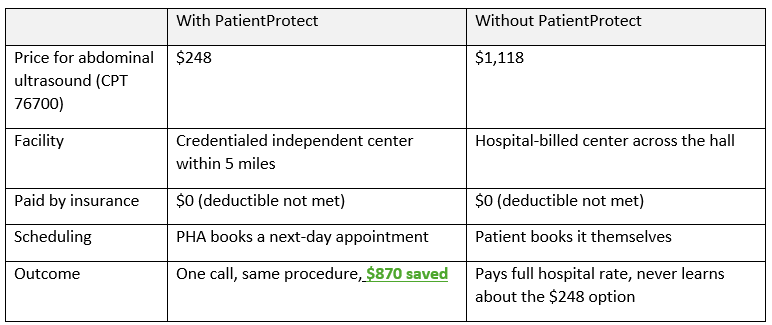
With vs. Without PatientProtect
The procedure was the same. The price, and who knew about it, was not.
Five Lessons From This Case
• Location doesn't tell you the price. A center that looks stand alone can still bill at hospital-system rates, and that is invisible without someone who knows where to look.
• Referrals don't consider cost. Doctors refer within their system, and price is rarely part of the decision. PatientProtect fills that gap.
• An unmet deductible makes you the payer. With $1,975 remaining, insurance paid $0, so every dollar saved was real money kept.
• The PHA is an advocate, not a tool. A knowledgeable person recognized the billing issue and acted on it in the same call.
• Imaging price gaps are common. PatientProtect members regularly find large price differences on standard imaging orders.
PatientProtect is a care navigation and cost-guidance service, not an insurance plan, health insurer, or licensed medical provider. All guidance is limited to care-setting and cost decisions. Always follow the advice of your licensed healthcare provider.